






We all know that keeping original historic windows is the best option, visually, financially, environmentally, and for saving energy.
If you are not aware of this, you had better read these articles about windows and get with it before you make a bad decision and waste your money.
Unfortunately, some of you may have moved into an old house where the original historic windows were replaced by a bad homeowner who fell for a bunch of lies in a sales pitch by a window salesperson. The worst being Anderson & Pella.
Well, there is good news! And it is because of improved technology, so read on.
The following information comes from Heirloom Windows , a window manufacturer making replica windows for historic homes with state-of-the-art vacuum insulated glass.
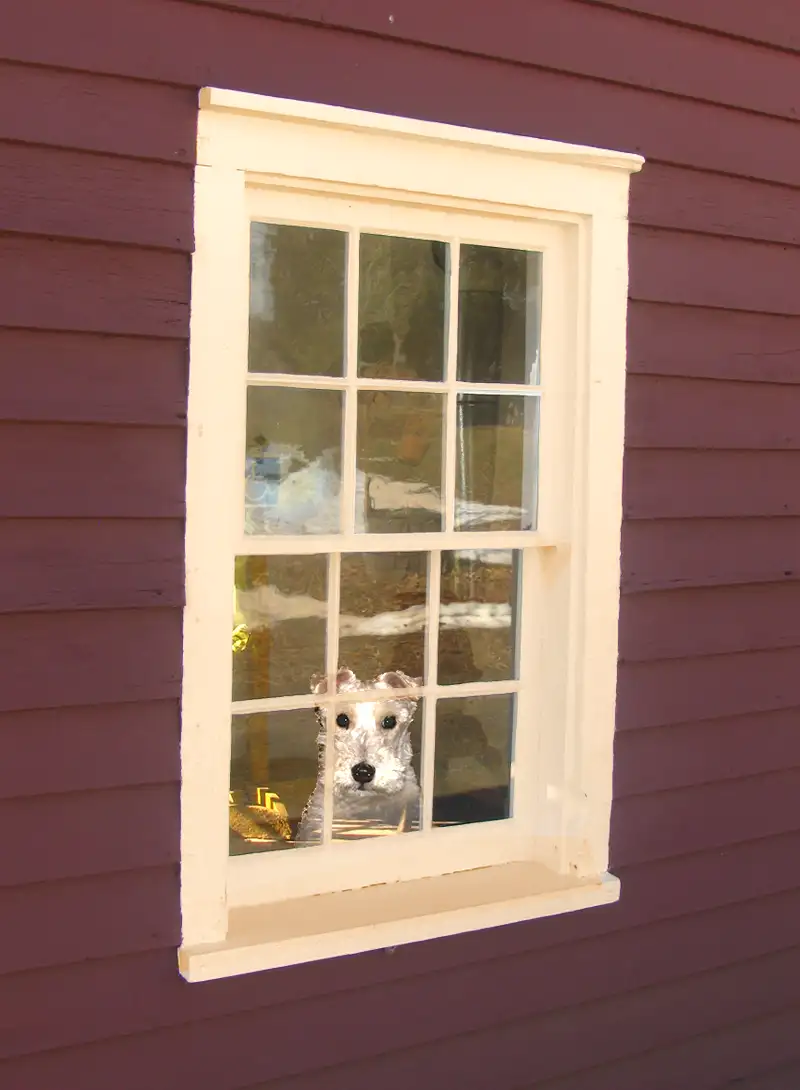
Lucypooh is watching through this 18th-century window. Notice the wavy glass.
Why Most Replacement Windows Don’t Look Right in Old Houses
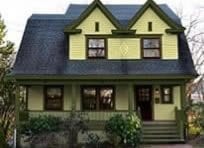
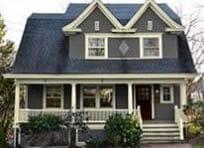
If you’ve ever seen a replacement window in a historic home and thought “something feels off,” you’re not imagining it. If you do not understand this drastic difference or know what to look for, it is simply explained with good versus bad photos explaining window design here.
Most modern replacement windows use Insulated Glass (IG). It improves energy performance—but it comes with a tradeoff most people don’t realize and are never told about by the replacement window salesperson. They will say anything to make a sale and get a nice commission. This can be a good paying job.
IG glass is thick. To accommodate the thick IG glass, the sash holding this window must be thicker. This extra space brings the window sash out farther (proud) of where the sash should be. When these windows fill a window opening, they create a flat appearance by eliminating any shadows.
Additionally, to fit that thicker glass into a traditional wood window, the muntins (the wood bars that divide the glass) have to be altered. They get flattened, lose their original proportions, and often reveal a clearly visible spacer bar between the panes.
These are small details—but they’re exactly what give historic windows their character. And once they’re gone, the window looks quite different.
This is the top reason Historic Preservation Commissions reject standard replacement windows. See for yourself in the image below.
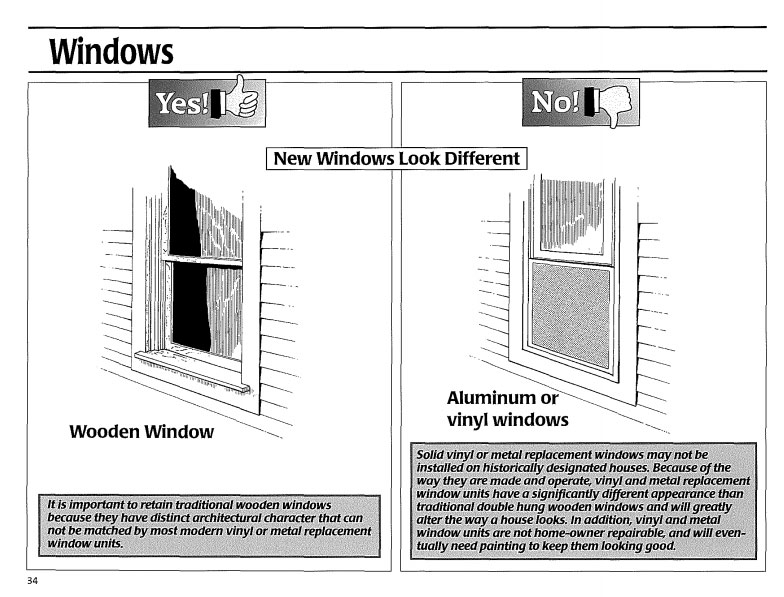
On the left, the old wood window is set back, creating shadows and interest, while the new replacement window on the right has thick insulated glass, flattening the appearance.
This is the image I tell homeowners to print out. This will stop the double-talk of a salesperson so they can understand the faults of the windows they sell.
New and Improved Technology.
Vacuum-insulated glass (VIG) changes that equation.
Because it’s much thinner than conventional insulated glass, it allows the window to maintain original muntin dimensions without introducing a visible spacer bar.
The result is a window that performs like a modern system—but still looks like it belongs on the house.
But this is not the entire answer. You must be an educated consumer.
All Vacuum-Insulated Glass is NOT the Same.
As explained above, you now know that Insulated Glass (IG) is NOT a good choice for windows and Vacuum Insulated Glass (VIG) is.
Choosing VIG is only the first step—choosing the right VIG product matters just as much.
All VIG glass is NOT the same. Today, multiple manufacturers produce VIG using the same basic principle, but with differences in performance, construction, and how well they adapt to real-world applications such as historic windows.
For clarification, VIG is not a brand or a single product—it’s a category of glass. Some products you may have heard of, such as Pilkington Spacia, one of the forerunners in the US market, are simply one example within that category. There are many others, most of which are manufactured in Asia.
Pilkington Spacia, however, is no longer in the lead. They have fallen behind in the technological advances of vacuum-insulated glass. Currently, there is only one brand made in the USA, making it the logical choice in every case. Luxwall glass is now the top choice for vacuum-insulated glass.
Why This Improved Glass Matters.
Historic homes are not defined by grand gestures—they’re defined by the small details that give them life. This is why a homeowner may not think they are doing harm to their house. They can be small details but slowly these details add up and your house becomes something quite different when compared to an older photo.
Shadows are what animate a façade. Original windows with historic glass produce crisp, lively shadowlines. With properly selected VIG glass, that character can still be preserved.
I am NOT saying you should replace your original historic windows but I am saying to replace the cheap looking (although still expensive) replacement windows.
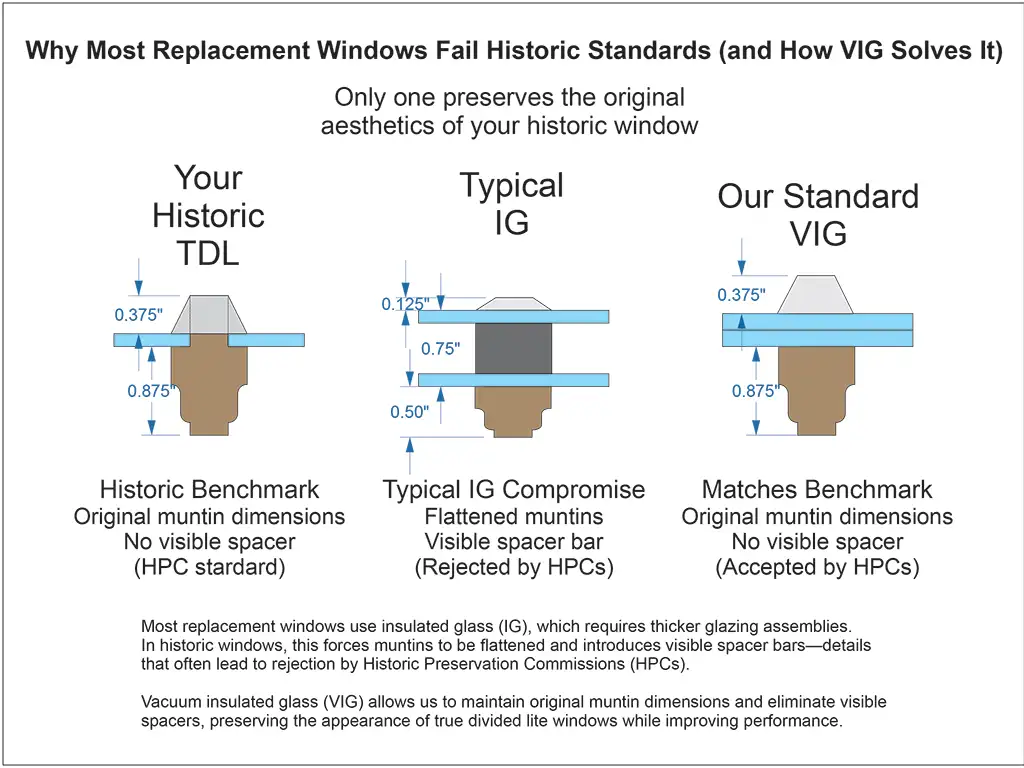
Historic window glass compared to typical insulated glass compared to Heirloom Window’s insulated glass design.
As you can see from the diagram, the type of glass used can make or break the curb appeal of your house. The vacuum insulated glass Heirloom Windows uses can bring back the charm your house lost with bad replacement windows.
The Old Corner Bookstore (1828) in Boston replaced their 1970s replacement windows with VIG glass approved by the Massachusetts Historic Commission.
What to Look For in a New Window:
- The window sash is set back in the casing of the window. You must memorize and print out the image showing this.
- The thickness and shape of the muntins .
- Whether you can see a spacer bar between the glass.
- How closely the new window matches the original proportions.
Window Diagram Explained in Detail.
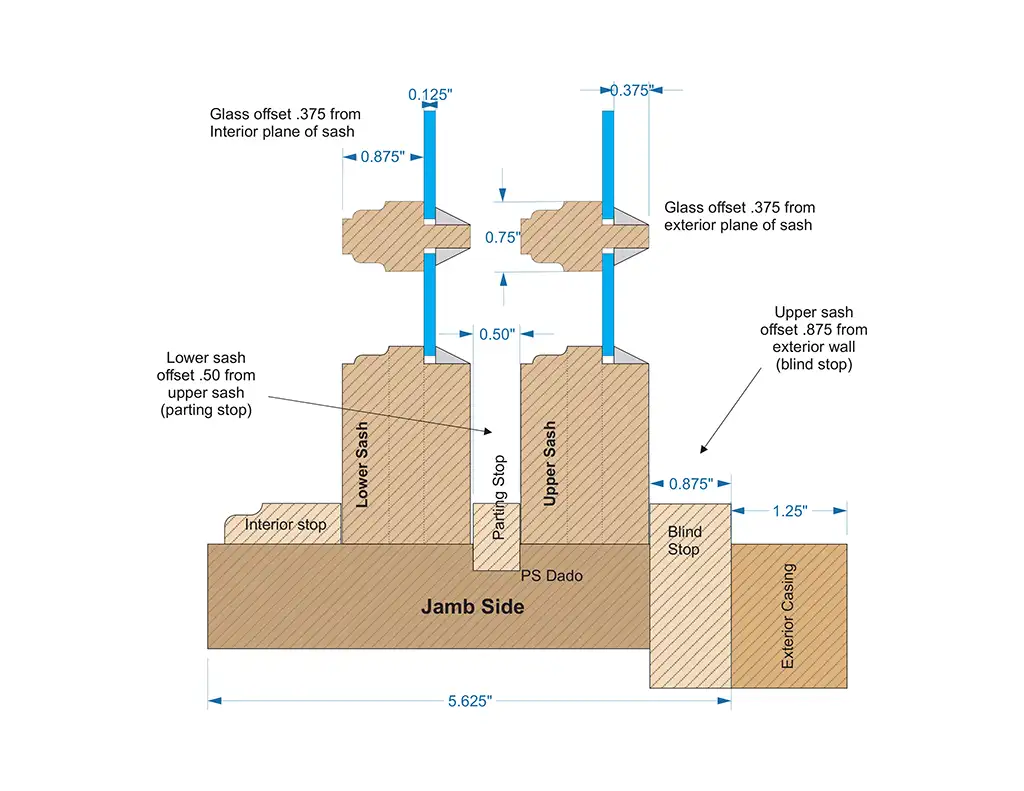
Let me help you understand what you are looking at for this can be confusing.
You are looking down at a window that shows both the upper sash and the lower sash. The lower sash faces the interior of the house on the left side where you would first open the window.
To the right side of the diagram is the exterior of the house. On the far right the diagram shows the “Exterior Casing”. In this image, the exterior casing as you see is only 1.25 inches. This exterior casing is called a brick mold because it is narrow and used only for a masonry house. To the right of this would be either brick , stone, or stucco. This brick mold will be set deeper into the brick/stone siding. A thicker brick mold, sometimes double in thickness, is sometimes found on older and more elaborate homes for it provides a nicer stronger frame to the window.
Windows for wood sided homes would never have a brick mold framing the window. The problem is that many replacement window manufacturers install this skinny brick mold on a wood sided house. This brick mold is very nice on a brick house, but terrible on a wood sided house. This is important to understand for few salespeople actually understand this.
A wood sided house will not have a brick mold but a window casing. This casing is 4.25″ wide or more and forms a nice frame around the window. So if you have for example clapboard on your house, the above diagram would show “exterior casing” being at least 4.25 inches. Then to the right of that will be your wood siding.
I have a Window Parts 101 showing photos pointing out and describing the parts of a window here.
And for more information on replacing windows, click here.
The Bottom Line.
Not all “wood windows” are created equal. Some windows force a homeowner to make compromises that change the appearance of your home. Other windows are designed specifically to preserve it.
Heirloom Windows can help you get your house right! If you have been reading my posts, you know that I am tough. I do recommend giving Bill from Heirloom Windows a call and he will be happy to help you. Continue reading here for more details and a window diagram.

Love you guys and Lucy Pooh, too! Would you kindly recommend a window company I live in the Chicago area, unfortunately. But I do need new windows. The old ones were removed and they put the plastic crappy ones in and I’m looking for windows that will keep the house cool in the summer and warm in the winter. Do you know of roofers and siding companies as well if yes please recommend them they’re so many and I trust none of them thank you so much for all that you do. With gratitude,
Hi – yes, I recommend Heirloom Windows. Here is a blog article explaining what they do.