


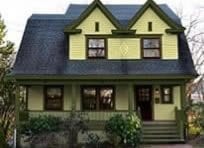


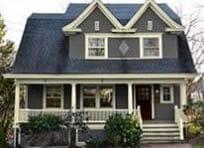


Walkway – Pathway lighting is a trend you see almost everywhere on middle-class homes these days.
Not only walkway lighting but lights everywhere – on fence posts, newel posts, around trees, everywhere you could imagine. Just like black and white houses , this trend is out of control!
This is a cheap attempt at curb appeal. Yes,some people actually believe this will improve the curb appeal of their home. Let me explain.
There are much better options.
Most of these lights are solar. I will show you that using solar walkway lighting fixtures on the walkway, in the landscape, or anywhere, is a beacon to find the unsophisticated homeowner with uncultivated taste.
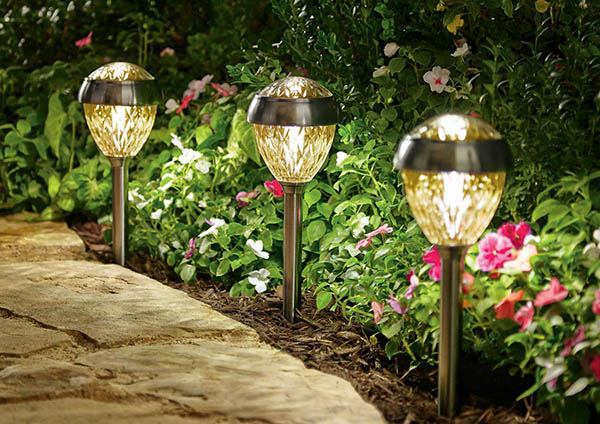
Looks so pretty but in real life so tacky and cheap looking.
If you found interest in this website, you evidently care about your home and may just need some guidance, so read this and get with the program!
Exterior lighting is important to have on all homes. It is needed to avoid tripping hazards, it adds warmth and makes your house look welcoming, and can avoid making your house appealing to burglars. After this, the rest is optional. Additional lighting must be done right for it can make or break your curb appeal. So if you like the look of lighting on your house, in your landscape or just for extra light, read on and see for yourself. You will see what to get and what to avoid to give your house the best curb appeal.
Types of Exterior Lighting.
There are basically 3 types of lighting to be used on the exterior of your house.
- Entrance lighting (electric hard wired).
- Walkway – Pathway lighting (electric hard wired low voltage or cheap looking solar).
- Landscape & Architectural lighting (electric hard wired low voltage).
Entrance Lighting.
All houses should have a light at the front door. This is a beacon for the visitor to follow as they approach your house. This is the main and most important light.
This light should be welcoming and light up the immediate area of the front door. It should be just bright enough to create a wash of light onto a portion of the steps but not so bright to create an industrial effect. If the light creates shadows near the steps, the lighting may be too bright.
Some people may turn on their front entrance light only when expecting guests. I recommend keeping it on every evening, home or not. Smart bulbs can be set by an app on your phone to select a time for the light to turn on at dusk until a later time in the evening. I have mine go on at dusk and off at 11:30 PM.
This and all exterior lights should be warm light – not the cold blue light.
Walkway – Pathway Lighting.
Here is where the problem begins and this is a big one. The focus here are the most popular lights you see that are plastic and solar powered. These are the lights you see that people stick in the ground to light up their walkway or pathway and also stick in other unflattering random places.
It seems that homeowners are fearful that their visitors are incapable of walking up to the house and may trip, or they just like the idea of lighting since their neighbors are doing it. Just because they do it does not mean you have to follow their uncultured taste. These lights look awful!
I have seen advertisements from Walmart, and actually the pictures they have online don’t look bad. Of course the lighting advertised will never look like the image displayed.
Problems:
- They are never never never straight and if you do try to straighten them, in a few days they will be crooked again.
- These lights are solar powered and only glow although some may light up the pathway slightly.
- You can buy a 12-pack for $36.99. That comes to $3.08 each. Do you really think you are getting something good at this price?
- You can bet if a homeowner only needs 8 they will find any random place to stick the extras.
- They can be installed by the homeowner in 30 seconds. Most homeowners are not knowledgeable about curb appeal and end up making a bad situation worse.
First of all there is seldom a need to light the walkway leading to your house. The front door light should be sufficient. Most homeowners add them as a tacky decoration and that is all they are good for. If you are in that rare situation with a need for light, there are other options to be discussed later but here I just want to convince all homeowners to stop purchasing these lights to use anywhere. The only place they belong is in the trash!
Again – do not use these lights for your walkway or landscape at all!
My purpose here and with most of my articles is to point out, using photographs, the problems and then let you recognize the faults when you see them.
The challenge:
- Drive around and notice if you ever see any lights that are standing straight in the ground. Also notice how the house is kept up and the homeowner’s knowledge of curb appeal. Is the focus the front door? Does the lighting provide a good distribution and balance across the property?
- Next drive around in the better neighborhoods. Yes even the neighborhoods with ugly McMansions. Still a lot of bad solar and the DIY Malibu lighting sold in big box stores, but you will have more of a chance seeing architectural/landscape lighting professionally installed.
My advice is to never under any circumstance use these cheap lights Home Depot and Walmart sell.
Let’s take this to the next step. Never use any lighting on the walkway to your house unless it is incorporated into the landscape around your walkway. I will address this option later.
Before I go into other lighting options, I am going to pause and show pictures of homes with these awful lights. I will then show pictures of houses nicely lit.
Here are Examples of Badly Designed Lighting.
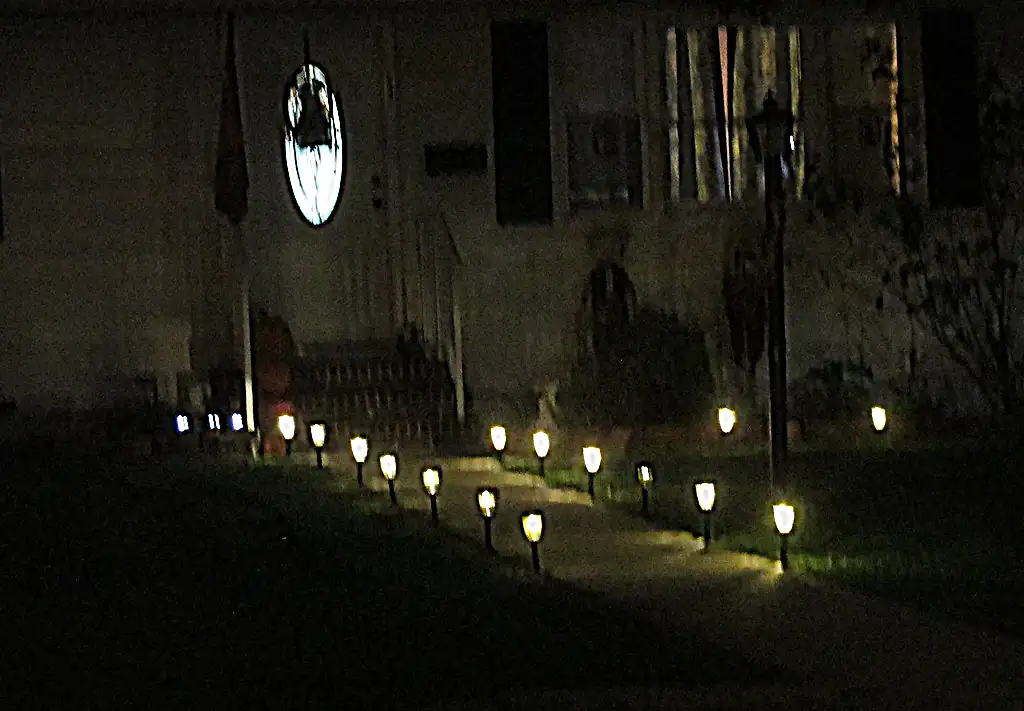
All dark and foreboding. Walkway lights lead you to a dark door. It is difficult to see but there is a lamppost to the right that is off. This lamppost would nicely light both the walkway and the door. Instead the homeowner wants to show everyone that they finally moved out of the trailer park.
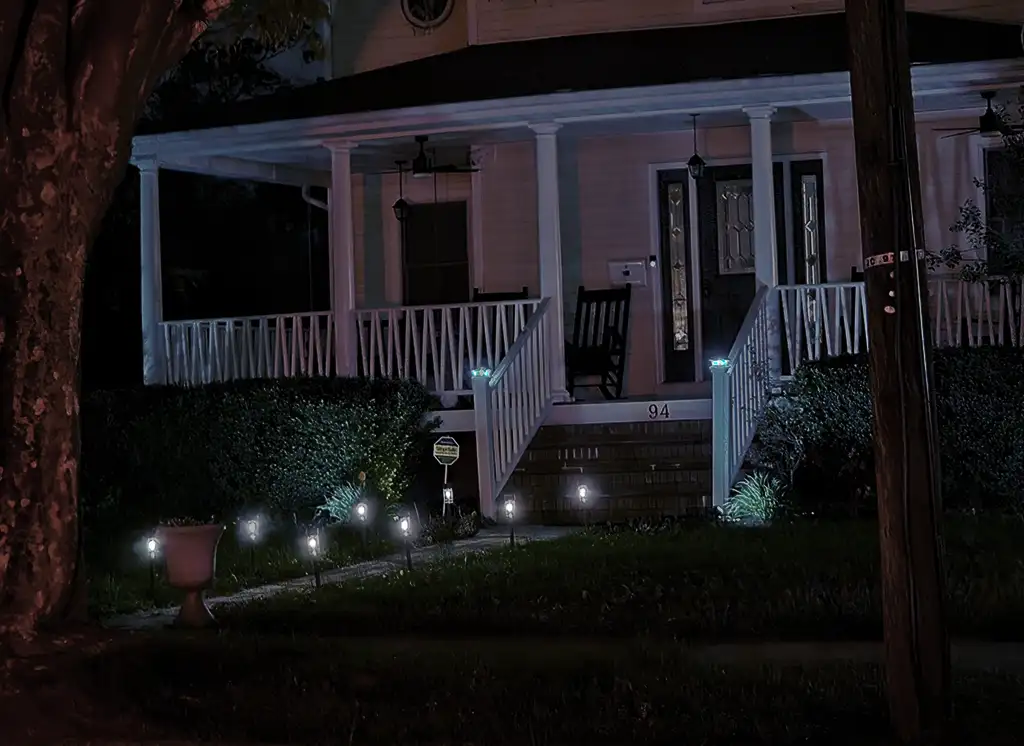
Crooked little walkway lights lead to a dark unwelcoming house. Notice the tacky lights on the tops of the newel posts. Does this really help the handicapped? If you need all these lights to help you enter this dark house you should stay home where you belong.
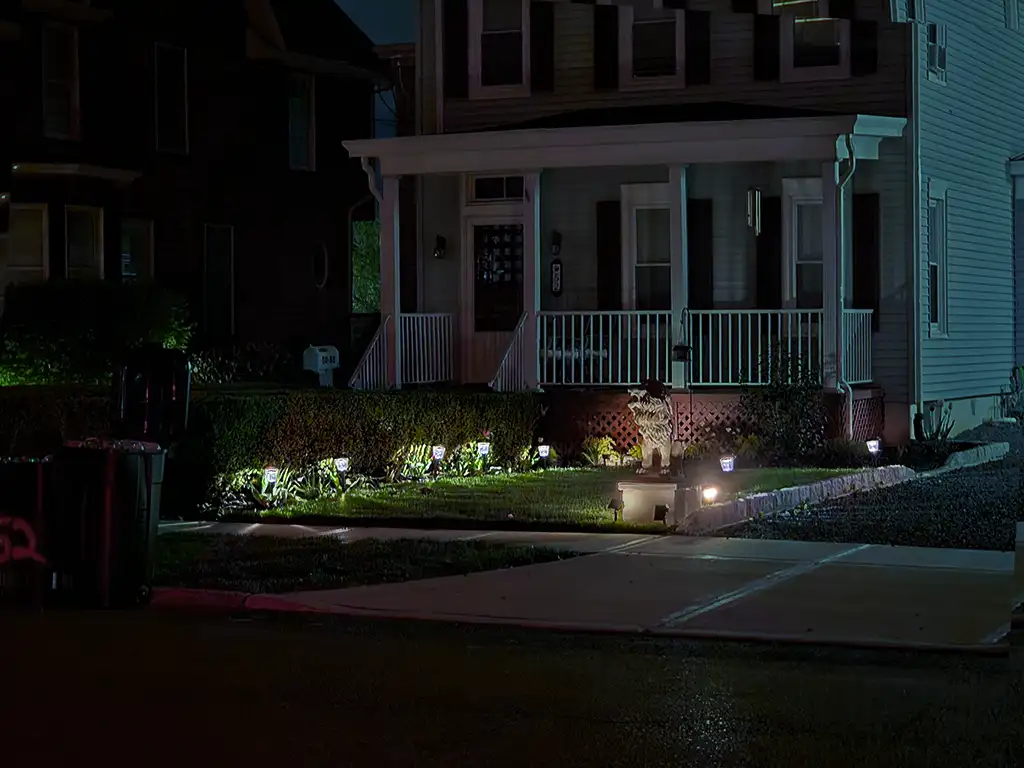
There is a narrow walkway to the front door with high hedges on each side and dangerously dark. The house is also in complete darkness, but the landscape in front is lit up like a circus and noticeable from down the street. These lights create a wash on the plantings, with two spotlights on the statue, and two others just stuck anywhere to use them up. All but two lights are crooked.
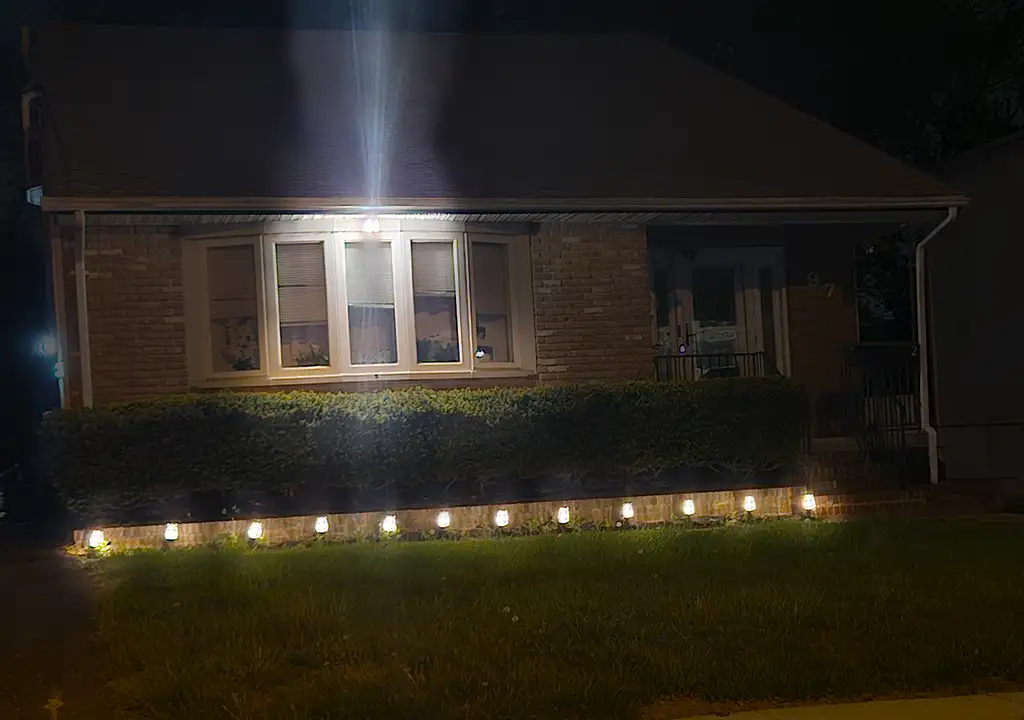
Dark entrance, with a line of crooked lights and a big spotlight shining outward lighting up a bay window. Does anyone like this?
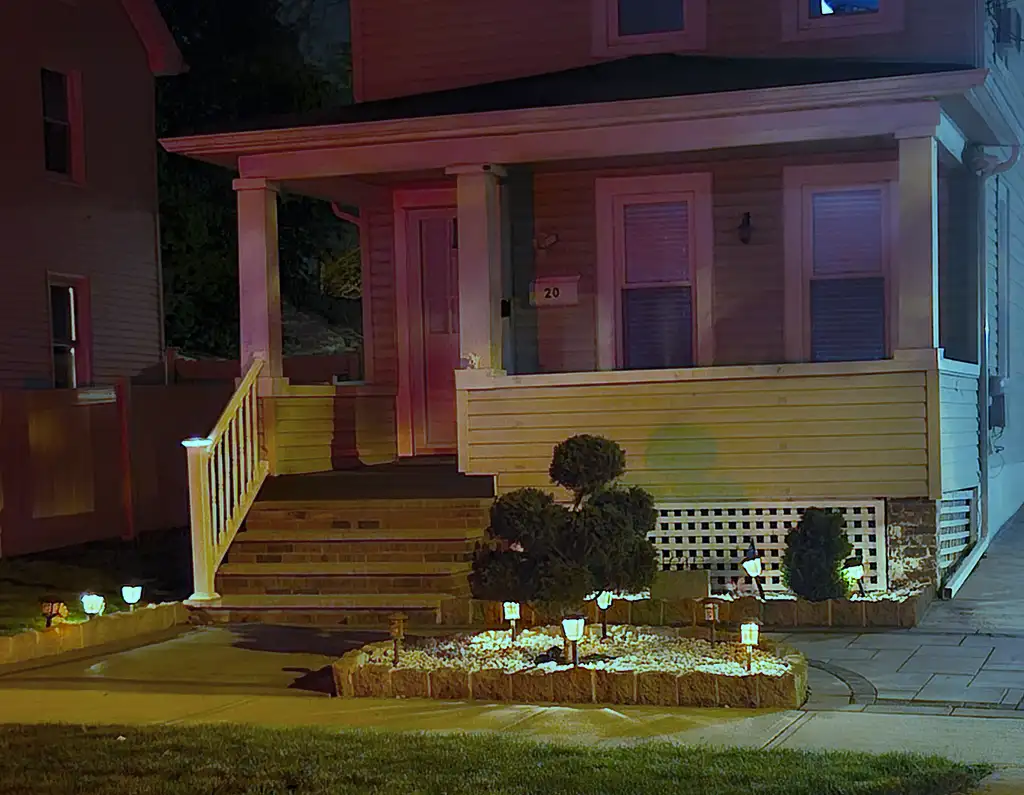
Eleven lights – three are not working. The other crooked lights and landscape design create a kitschy look. A circus of lights are waiting for the clown to arrive.
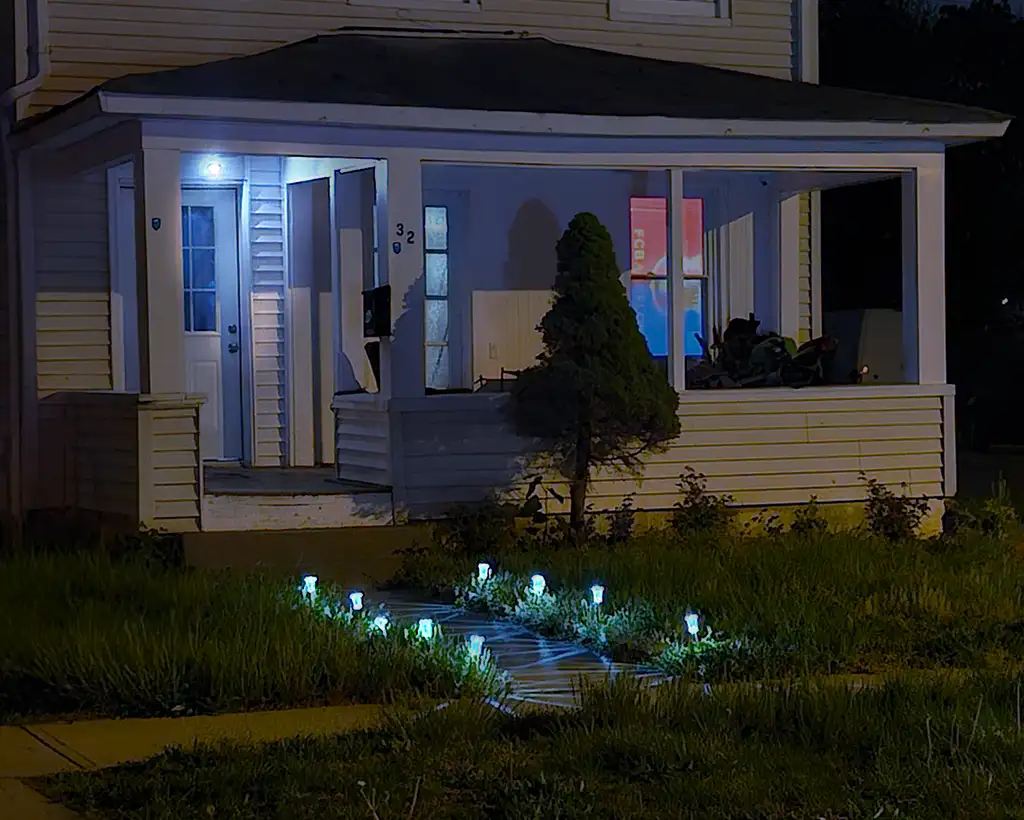
This house has a light over the doorway, creating a welcoming appearance. The cheap crooked lights are stuck in the grass and would have to be removed for mowing, although by the looks of this house, the homeowner probably skips that part.
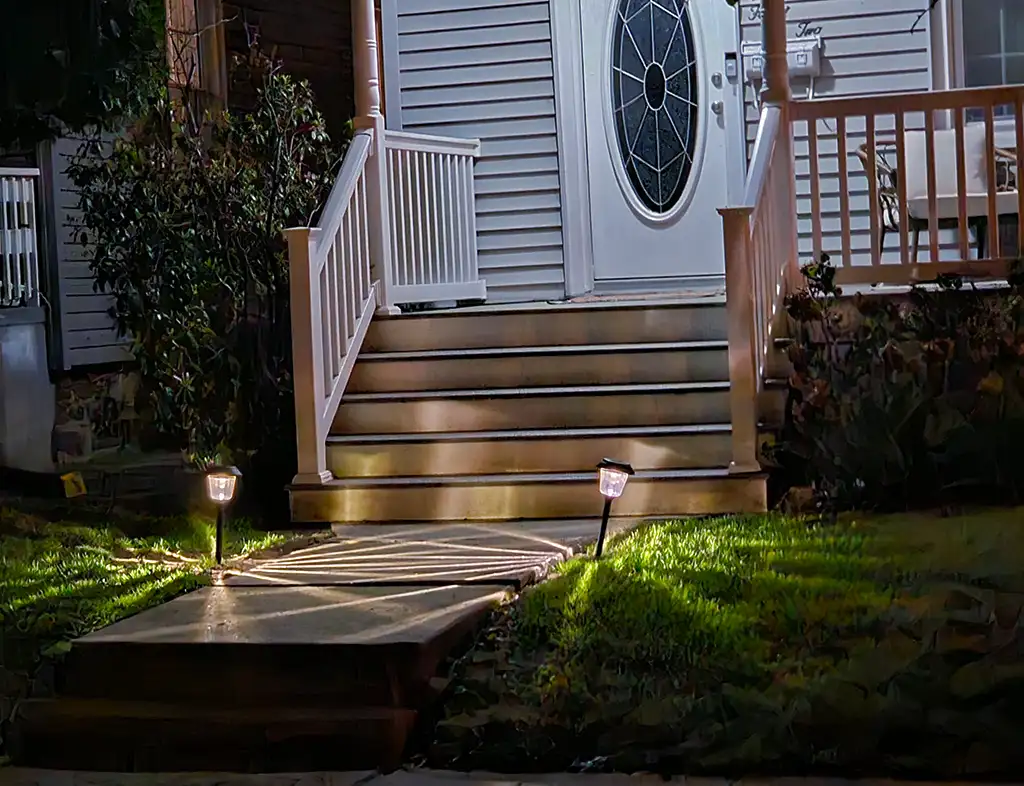
A nicely lit and welcoming entrance. The two drunken lights ruin what could be a nice entrance. The design cast on the pavement from the lights signifies the homeowner wants a fancy looking house. So classy!
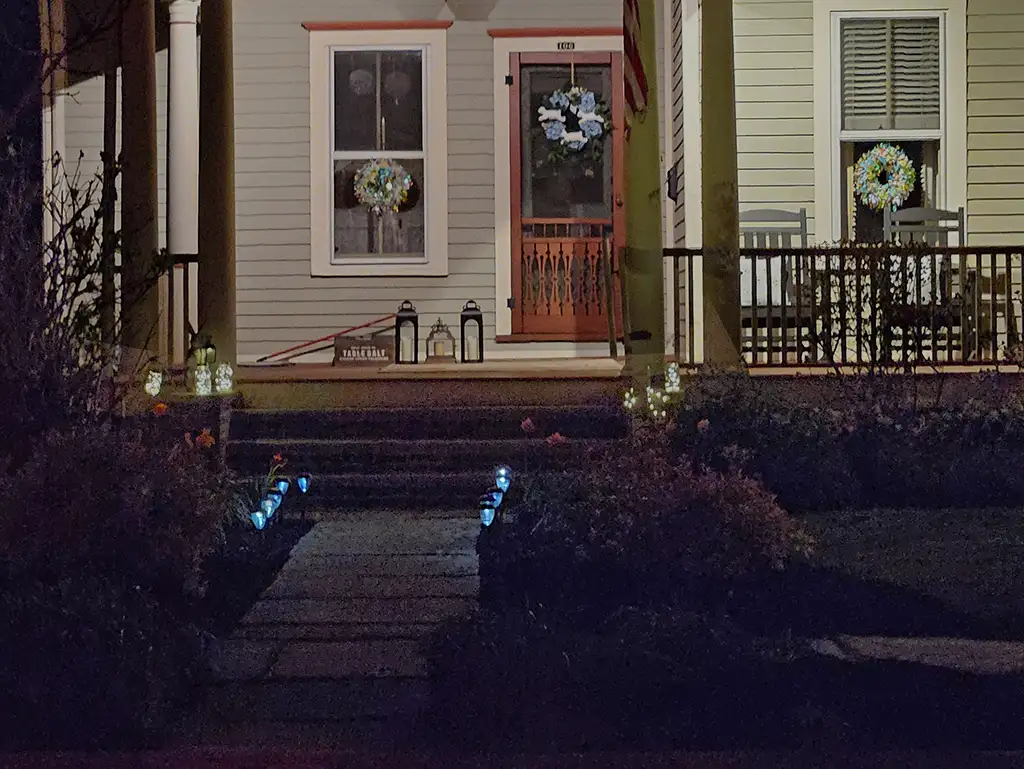
A very nice house with a nicely lit entrance. Why in God’s name would this homeowner put these walkway lights here? One may move into a nice home but still take the trailer park with them. Money has nothing to do with class as you see.
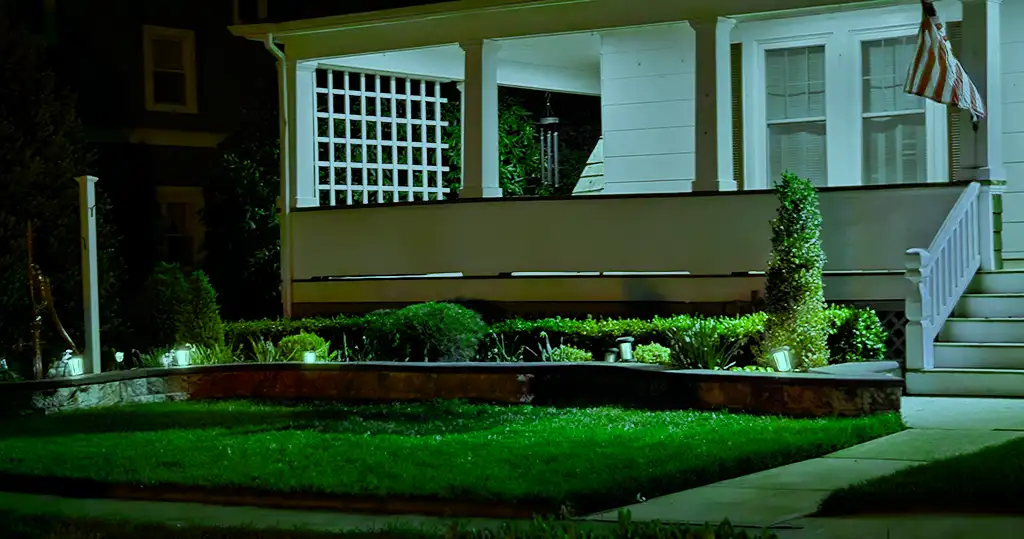
Entrance is nicely lit. There appears to be a barricade around the plantings, with every light being crooked. Just because the owner is a doctor does not mean they are design professionals.
Drunken lights are adding to the sloppy look. Notice the plastic shutters on each end!
Have you ever seen a light fixture such as these that are straight in the ground? How sloppy can people be?
I have been driving all over and never have I seen a house with walkway lighting that looks good. Walkway lighting is merely cheap clutter. It is just a gimmick to make homeowner think that there could be a tripping hazard and buy something new. People are always looking for “stuff” they wrongly convince themself will will improve curb appeal.
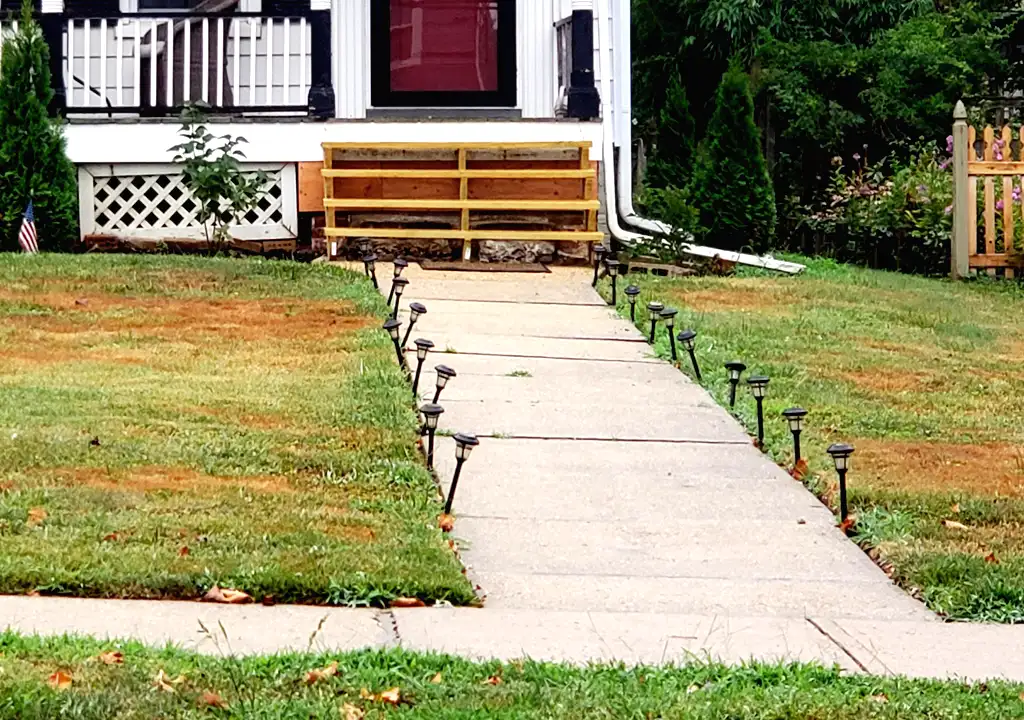
A prime example of lack of pride of ownership.
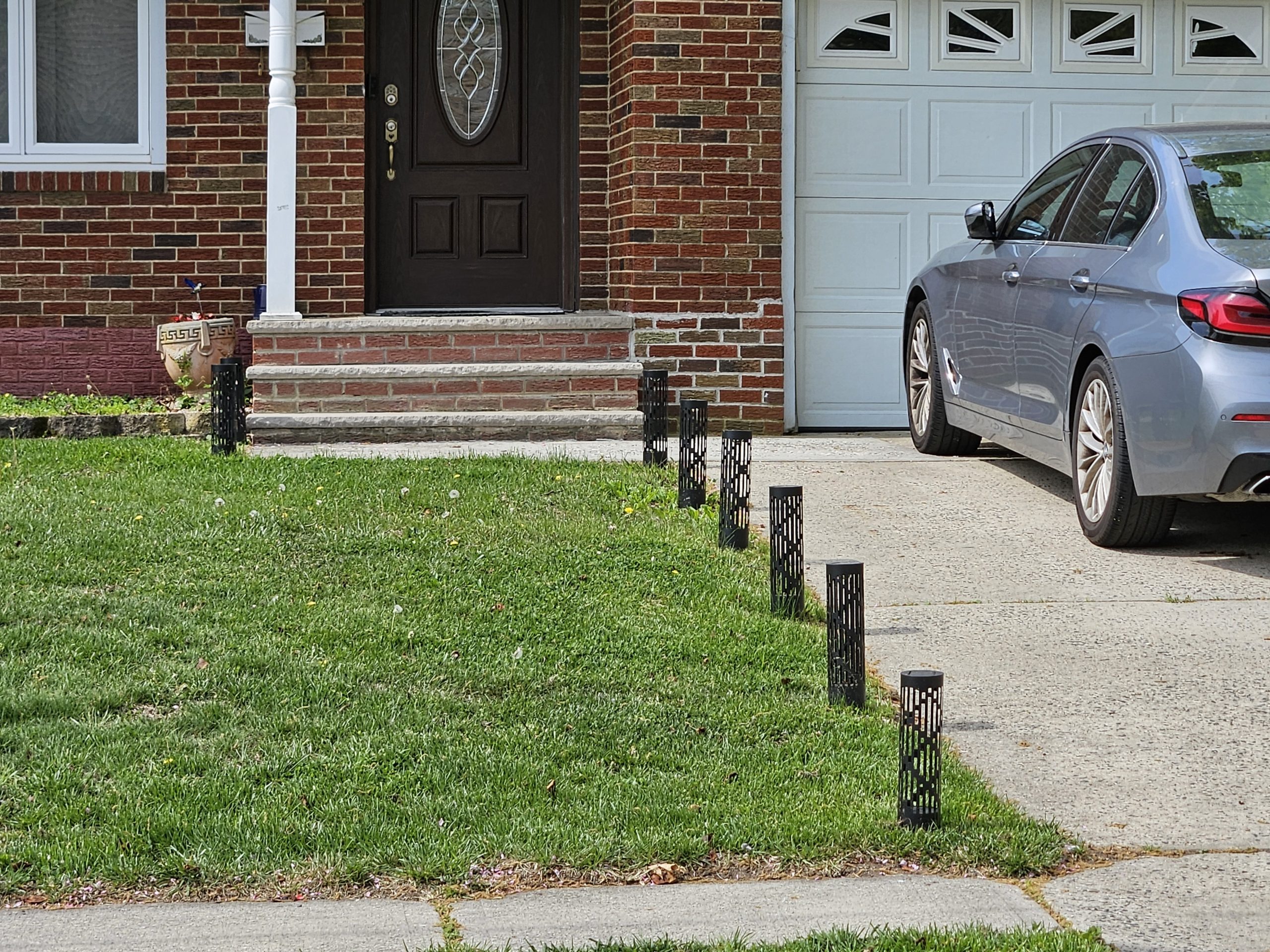
A different style, but does anyone really like how this looks?
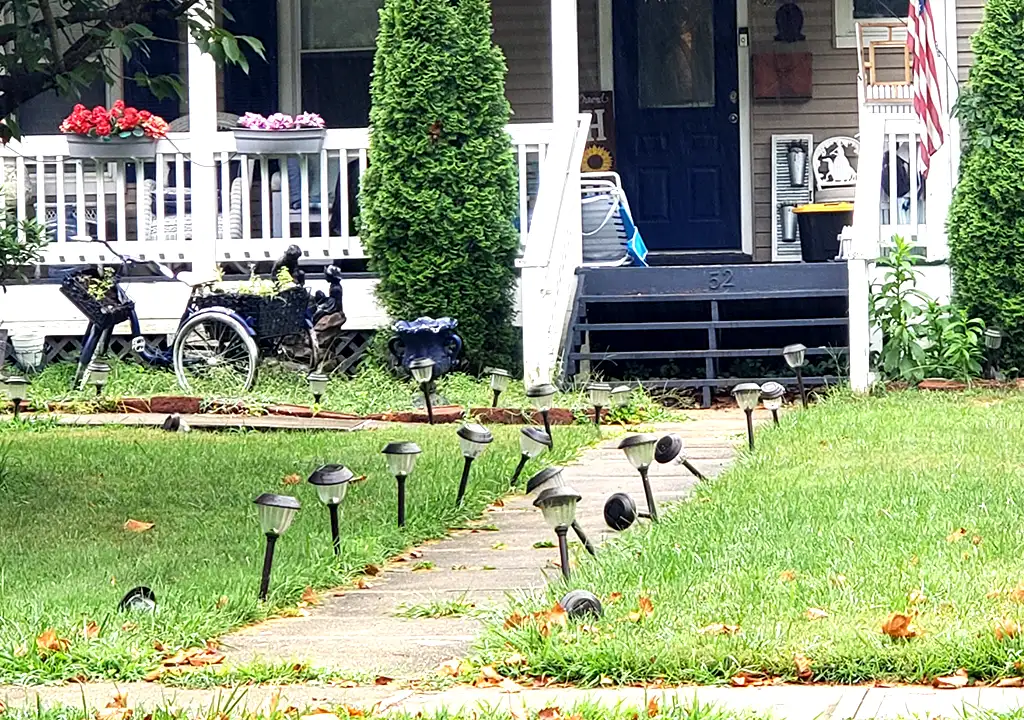
Do you want to be classified with people like this? Both the lights and the homeowner belong in the trash.
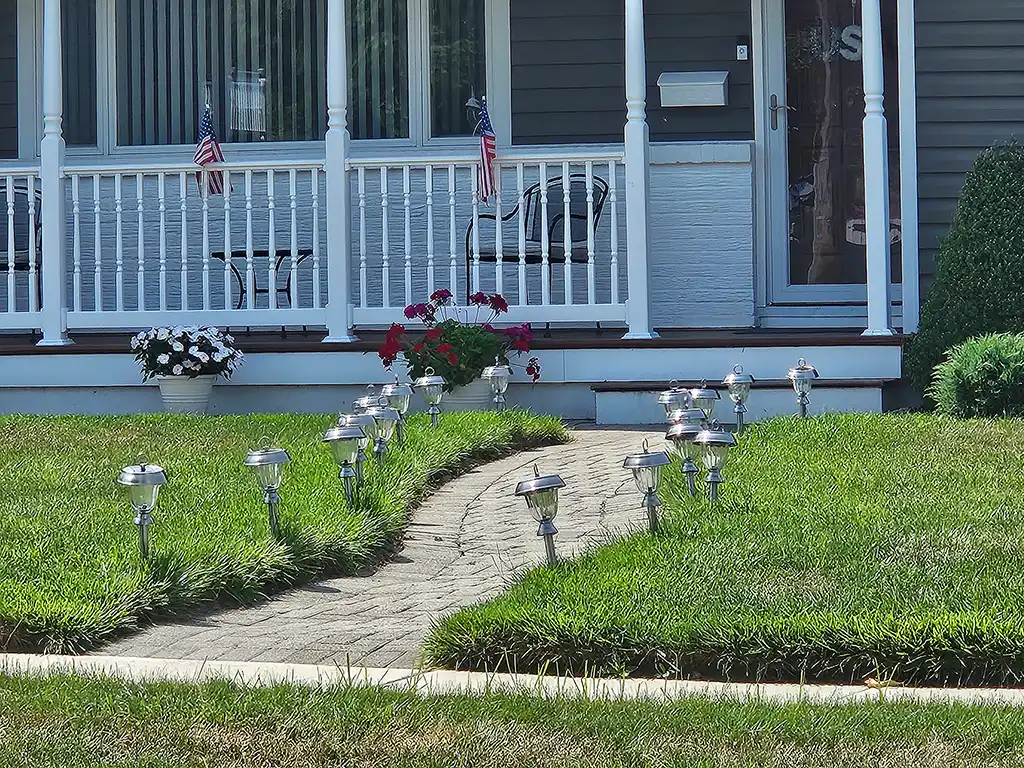
Silver walkway lights like flying saucers will hopefully take these homeowners far away.
All this lighting does is distract the viewer from looking at the house. Some houses need this distraction. It takes your eyes away from the entrance and makes you look at these lights. Why not get pink flamingos instead?
All they do is make a house look cheap and tacky and that reflects on the homeowner. Not much different than my parents telling me that if I am bad in school it makes them look like bad parents.
A home is a reflection on the person who lives there.
Enter the Clampetts! The Clampett family was the quintessential “hillbillies” in the TV series The Beverly Hillbillies (1962–1971). However, the house they lived in was a beautiful well-designed mansion. Even so, If someone calls you Elly May, they are saying you do not fit in with the suitable neighbors.
OK – enough of my rant!

Now for the Good Houses.
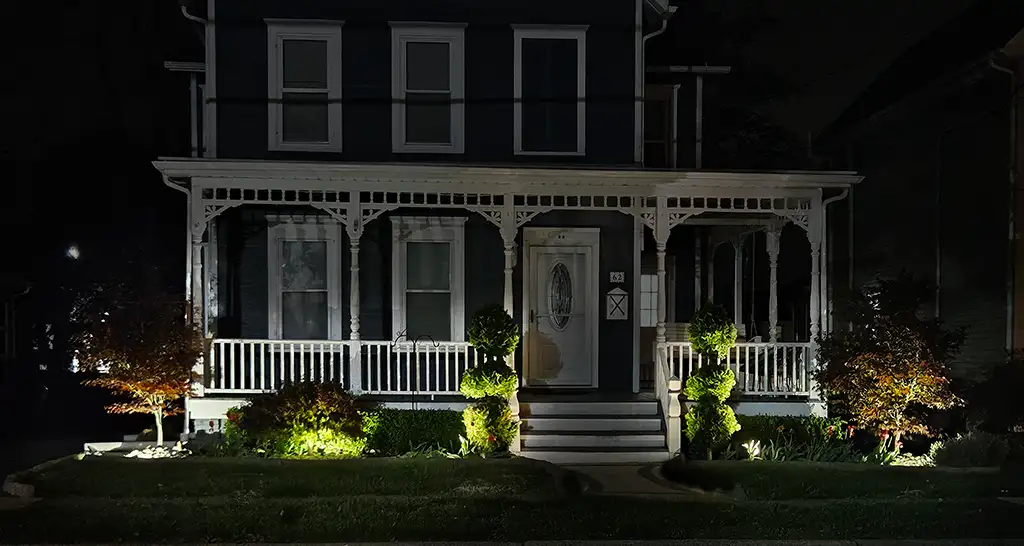
Nice job. Notice the plantings are washed with a soft accent of light. They even provide sufficient light for the steps. My only suggestion would be a light at the door. Even in the best neighborhood, there should be an interior light for both safety and appearance. Also notice how the plantings balance and ground the house.
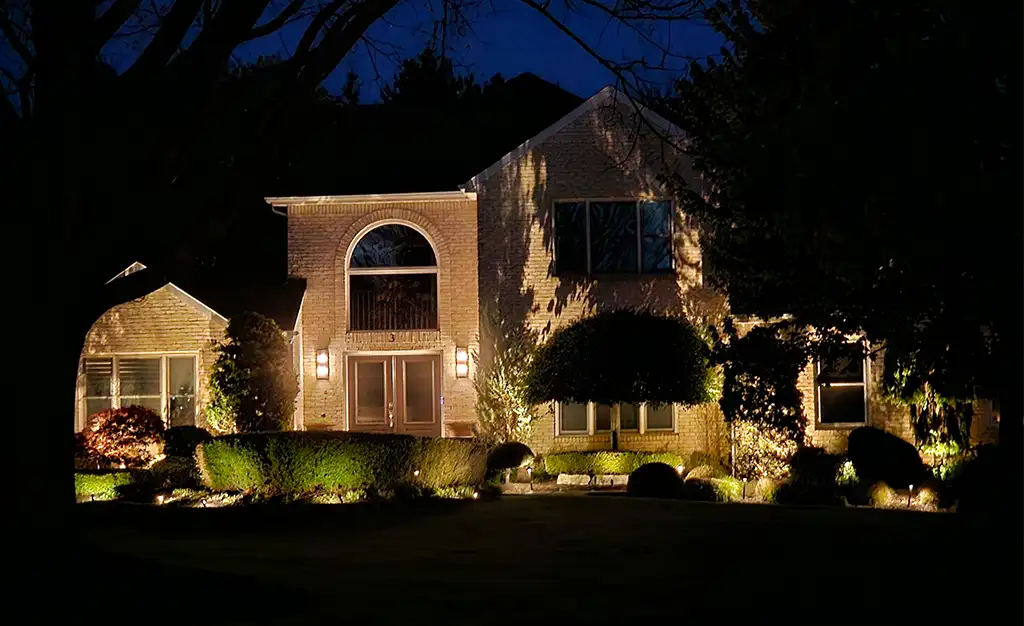
Bad architecture, but nicely lit. You can tell the lighting was done by a professional.
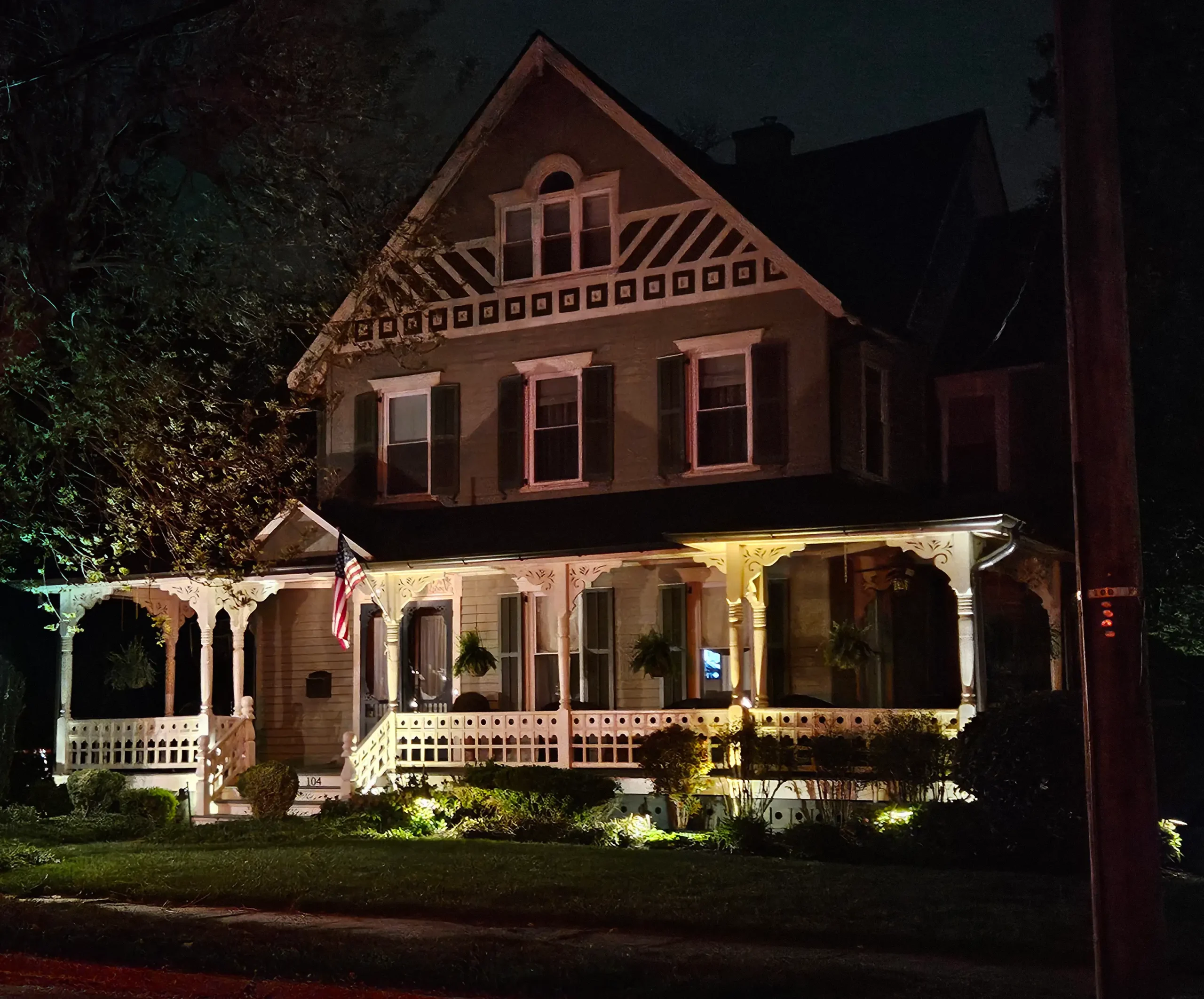
Tasteful architectural and landscape lighting softly brings the right amount of attention to the architecture. There is no need to go overboard with walkway lighting.
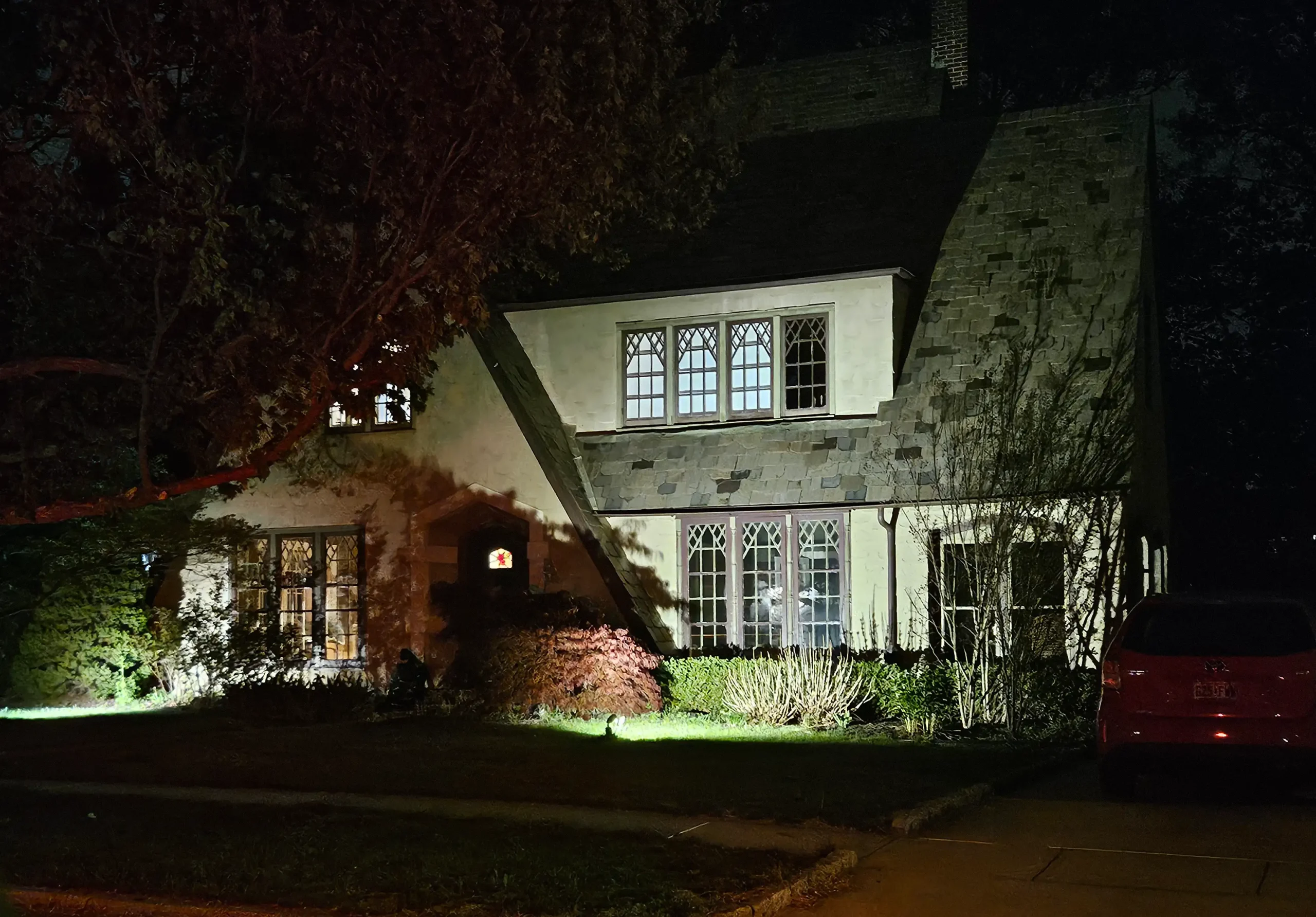
This Tudor Revival is gently lit with two spotlights. Although the house looks great, I would recommend a light at the entrance.
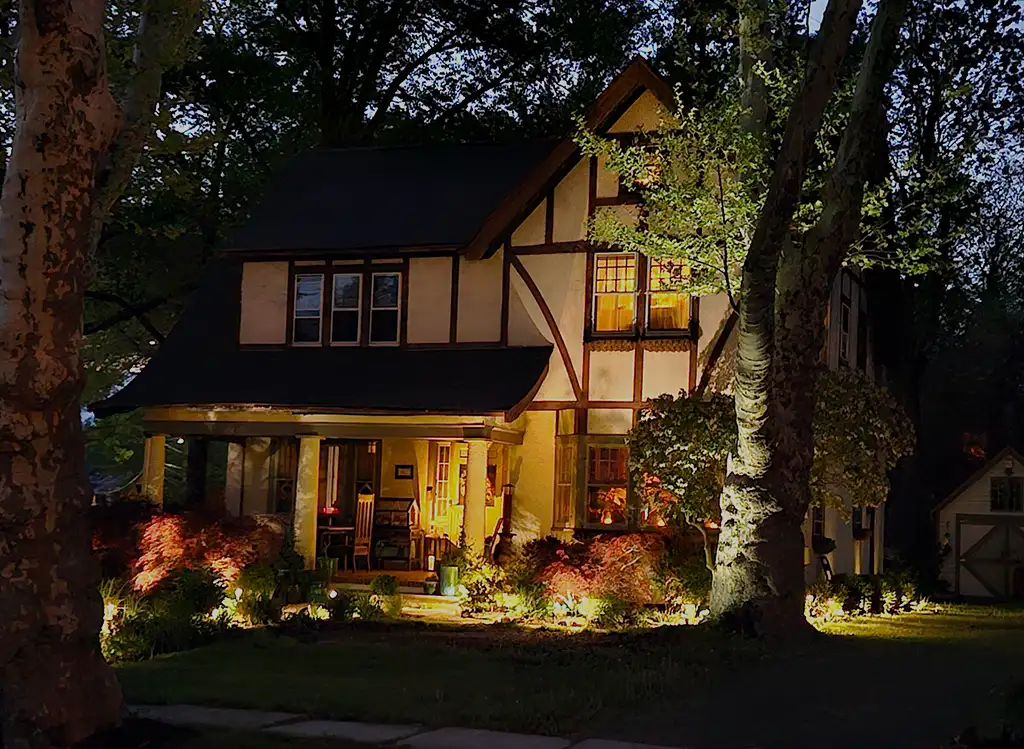
This house has it all. Just the right amount of brightness to show the architecture, lights in the landscape, and a nicely lit and welcoming entrance.
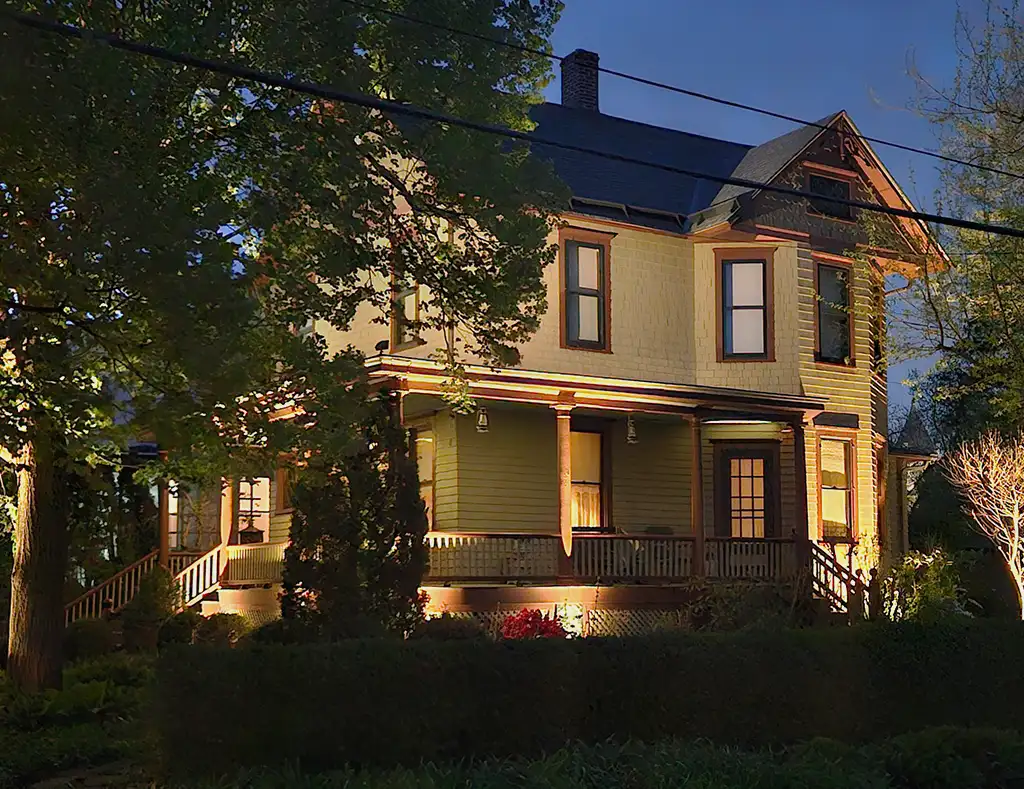
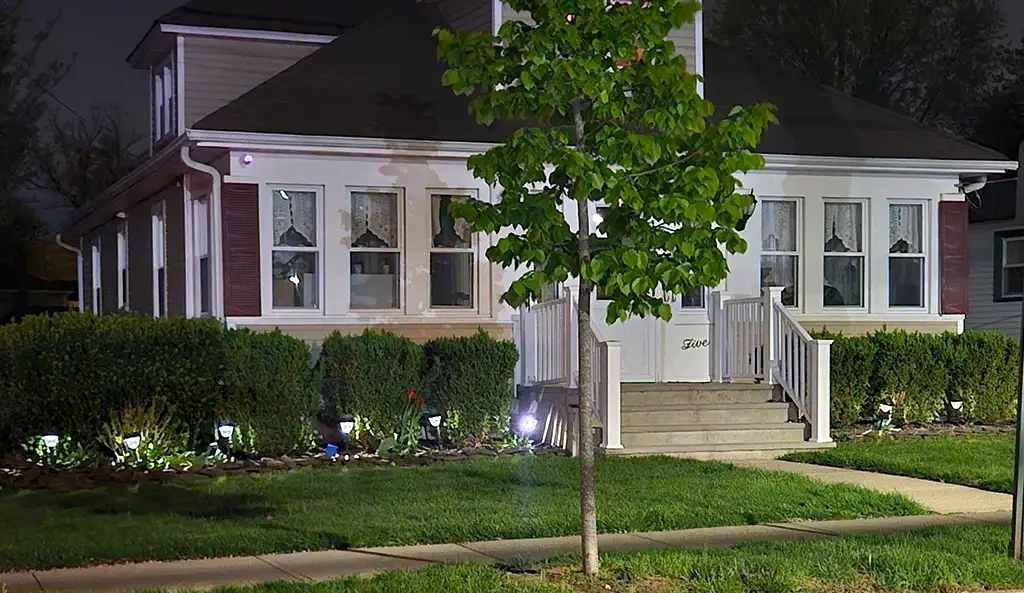
Lastly my house which is on a corner. Lights on the house and a few trees. The house looks less bright in real life.
Walkway Lighting Option.
I hope I convinced you to stay away from the stick-in-the-ground solar lights. No walkway lighting at all is best. If you really need your walkway lit and the entrance light isn’t enough, a lamppost will do the job. Lampposts were first used in the later Victorian period on more substantial homes, but really became popular on Ranch houses in the 1950s.
The last option is to use hard-wired low voltage electric lighting. These lights can be installed by the homeowner. There are options for the amount of brightness and they are constructed of metal and can be inserted deeply into the ground to avoid becoming crooked. One brand name is Malibu lighting.
I strongly advise, even though these are a better quality light, do not place them individually along your walkway unless you have plantings. This is important. The lights should light both the plantings and the walkway using direct light – not indirect. The lights will look their best when light is directed down towards the walkway and the plantings nearby. Landscape lights are direct lighting. The light is directed onto plantings creating a nice warm appearance. The goal is to see the effect of lighting not the light itself.
This is not always as easy as it seems and the best results will come from hiring a professional.
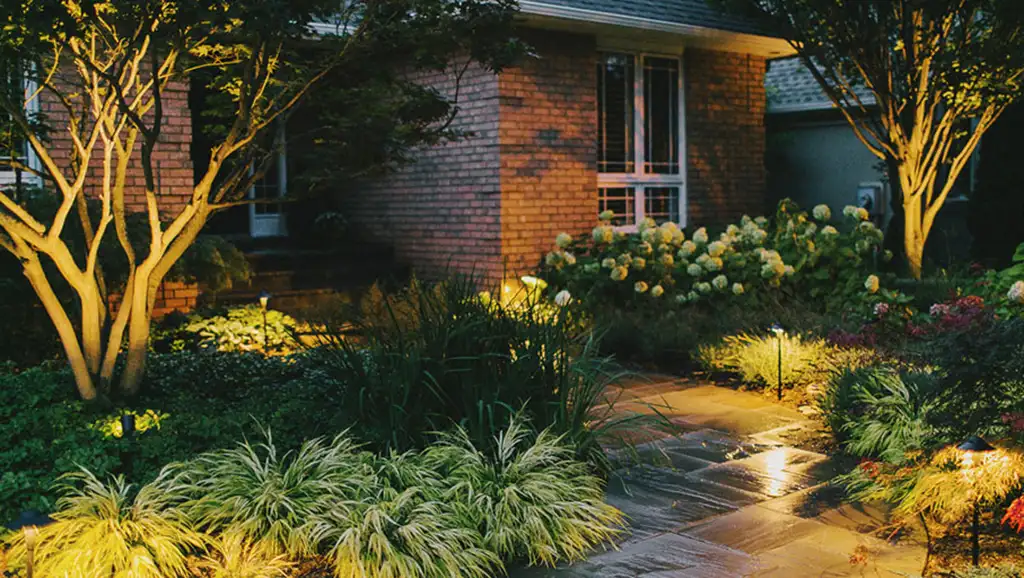
This lighting is low-voltage electric set within the landscape nicely bordering a walkway or pathway.
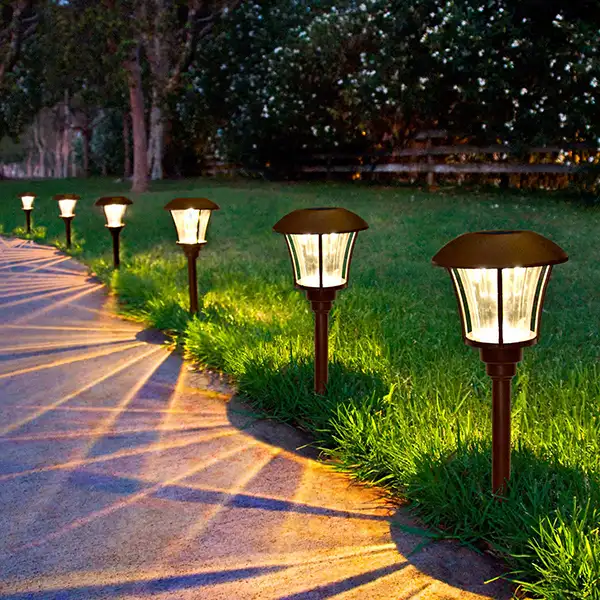
NO! Amazon image shows solar lights neat and straight but we know they will never look this way. The kitchy starlike effect further cheapens the house. Would you want to remove them each grass cutting?

YES. Direct landscape lighting is good. This low-voltage electric light casts direct light onto the walkway and the plantings.
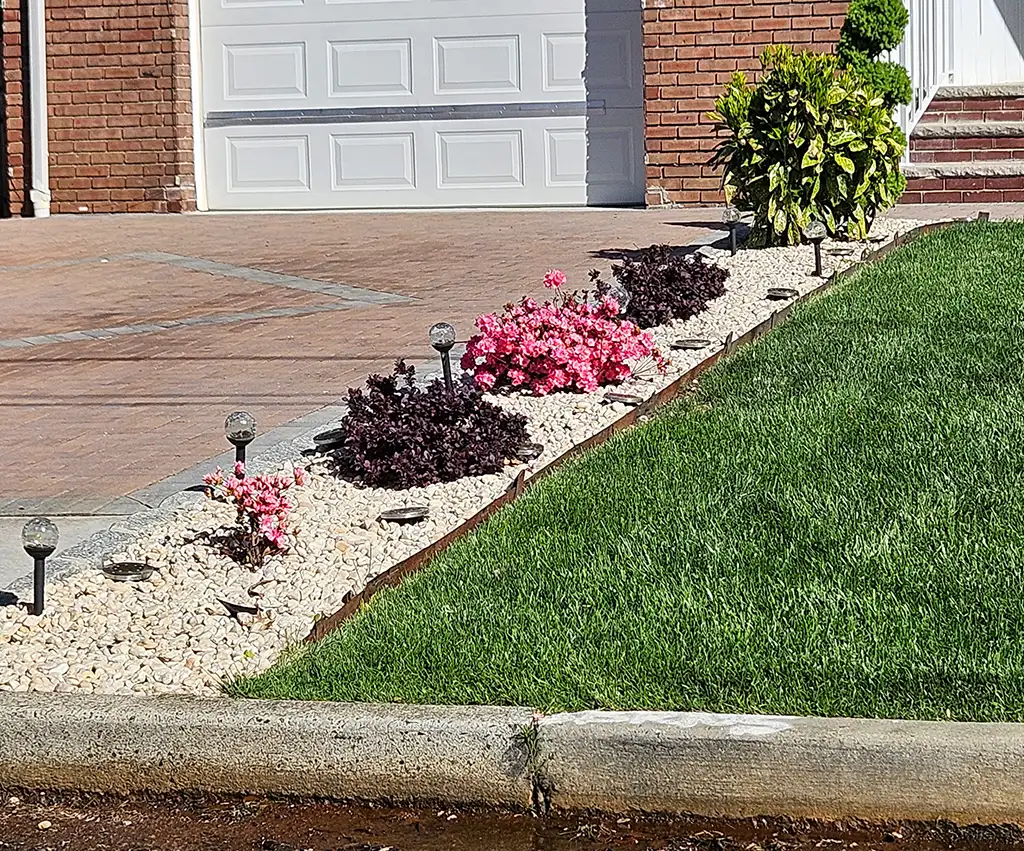
Not this! These are junk lights – even so, don’t just stick them in between plants.
Architectural and Landscape Lighting is the Best Option.
While the tacky solar lights discussed in depth above provide indirect light which is seldom more than a glow, low voltage electric lighting provides direct light. This type of lighting can create a soft wash of warm light on a house or areas of the house to display the architecture. It can softly light up a tree, be placed in a bed to light up shrubs, etc. It can also point downward in a walkway or pathway. Yes you can use these lights to light up the walkway to your house but to look right they should be incorporated into the landscape. You never want the lights to look like little soldiers standing in a row, straight or crooked.
There are low voltage lighting systems you can do yourself but a professional would do the work of a professional instead DIYer. If you want to be a Do It Yourselfer, read this article.
As for my house, I have been wanting to do this lighting for about ten years. I read a lot and drove around many NICE neighborhoods looking at examples. It is, well at least I thought it was more complicated for a house with a wrap-around porch. Each light also requires a specific type of fixture and amount of power depending on the area and brightness desired. My plan was to use the Malibu lighting system and the cost would have been about several hundred dollars for fixtures, wire, and transformer. With all my research I still was not comfortable that I would be satisfied with my own lighting plan to achieve the look I wanted. I wanted it to be as perfect as possible so I hired a professional. The lights are set via an app on my phone to go on at dusk and off at midnight. Yes, $8,000 was a lot of money but after all my research and agonizing I did over this I am happy with the result.
Conclusion.
Be sure to read the How-To link above. Lighting can really be expensive. For most homeowners, this is a drastic change from the crooked solar lights but your house is a huge investment and should look as best it can. My outlook is that if you cannot do it right, don’t do it at all. I’m not saying that a Malibu system is bad. It was just difficult for me to do with what I wanted and had to work with. Just stay away from the stick-in solar lights.


I agree. I used a cheaper set of just 5(then added one) lights(20 watts each on my home. Much bigger improvement then just lighting the walkway,.
Good advice! Yes, the “runway lights”, as we often refer to them in the landscape lighting industry – yuck! Avoid any lighting sets you see at the big box stores.
Even within professional landscape lighting, as pictured further down in this article, you want to use those sparingly. As a professional lighting designer and Installer for 23 years now, I always consider path lights as a last resort. First, illuminate the best features of your yard and home with spotlights (uplighting or downlighting / moonlighting). Then consider specialty light fixtures like built in step lights, wall lights, wall wash lights and even those string bistro lights. You’ll get a nice soft over-glow from these areas that will spill over into as lot of your pathways and preclude the use of path lights.
Then once you have those installed, fill in dark areas along important pathways with a few path lights. But chose the right fixture that puts off enough illumination so that you can space them out a ways apart from one another. A good path light will have a spread of 6-8′ away from it’s base. Which means you can space them 18-20′ apart from one another and still have good safe illumination along any pathway.
Another good pro tip: when installing path lights alongside a pathway, stagger the placement. First one on the left side, next one on the right side, etc. This looks much more subtle and less intrusive.
How about almost NO lighting? We have neighbors whose houses are lit up like cruise ships. We’ve had to install blackout shades.
‘Had to laugh out loud at the reference to “lit up like cruise ships”!!!! 😀
If you care about the ability to see stars on a clear night, please read about the “dark sky” movement (https://www.darksky.org/ ) before launching into a mega-lumen light show to impress your neighbors or ego. This probably means you’ll want to avoid up-lighting, sorry.
Besides, how are landscape lights, up-lights, etc. considered historically accurate? I’m shocked that Ken (the author) approves. Per this web site, our gutters and windows and shutters must be perfectly restored, but lighting is allowed to be a modern free-for-all?! Back when that pretty porch (pictured above) was built, you could likely see the Milky Way from a rocking chair on it. I doubt you could see many stars now, with that porch glowing like a Broadway stage. And how about all the neighbors that have to live near that porch? I say it’s obnoxious to intrude on the night, and your neighbors, and it’s a waste of resources and power consumption too — for no reason other than vanity while you sleep.
A strategically-placed lamp post (with an opaque top) is probably the only choice to preserve both the house and the sky.
You are correct that this lighting is 100% not historically correct. Lamp posts are only for 1950s houses. There should be absolutely no plantings around the house except for the corners on homes pre 1915 or so also. I’m just trying to find a happy compromise and the post is focusing on curb appeal not historic preservation.
My old rental next door to my house had evidence of a gas yard light pre 1900. The controls were still there sticking out of the ground. I would take a picture but they were removed by the current owner after I sold it in 2007.
I need to back either into or out of my curved driveway in the dark eight times a week in the winter months.
Sounds like I’m quite a pile of shite for not just parking on the highway and hiking into my neighborhood with a flashlight.
Sounds like you need something but it should also look good. I would put up some spotlights that are on a sensor to help when backing out.
Ken, You really know how to dive right in to the heart of a problem and come back up dangling the perfect solution. Terrific advice!
So period correct homes built before electricity have no power? Are you using candles for light. I light mine up for security reasons. And it looks good too.
It seems that you did not read the post. I am saying not to use walkways lighting for it makes the house look trashy. If you need additional lighting for safety reasons then add a spot-light or something that is appealing somewhere. You can add a lamp-post if you prefer but they are not appropriate for some house styles and periods. I am not saying not to do it but just be aware that they were popular during the 1950s. Understand?
When using outdoor lighting please use a shield so light points to the ground not lighting up the sky. When lighting is pointed upwards it causes light pollution destroying our starry night sky. DarkSkyMaine.com
It seems that some walkway lights – solar and small – are appropriate. This is especially important where the ambient lighting is dim or non existent and there are stairs – usually only one or two, which aren’t readily apparent. Some of my neighbors have put a couple of such lights in and I welcome them. They’re not making a statement, just assuring safety.
Yes – you may need some additional lighting but as you read, there are better ways to do that. First these junky lights that are invading neighborhoods are NOT light but merely just a marker with a glow. They are NOT lighting the walkway and making it as safe as people believe so why cheapen your neighborhood? A $2 light is what you get and that is what your house will look like it is worth if you go that route.
Path lights include both indirect and direct lighting. Combined with spotlights, path lights are a great compliment when quality lights are used and directed tastefully. Every example you gave both good and bad have really poor lighting and look like they are in a poor neighborhood. There are plenty of fantastic examples of path lights and spotlights combined to make a gorgeous exterior lighting setup. Indirect vs direct lighting simply isn’t the problem, you’re just encountering properties that lack taste and high quality light fixtures.
That is true. I try to focus on the homeowner that is in the middle class or even poorer neighborhoods. These houses are very simple but can look better than a home triple the price if restored correctly. The more elite neighborhoods rarely have vinyl siding and don’t have as many house design issues. On the other hand you really can’t depend on the class a person comes from. My grandparents were blue collar living in a blue collar neighborhood. Everyone had pride in their homes and the neighborhood looked wonderful. Now people with lots of money are living there and if seems like it could be the first time they are wearing shoes – pure trash! I guess you never know but in regard to your comment, yes I agree with you. I am always trying to bring people up a few levels and cleanse them of the trailer park taste.
The Old House Guy blog advises against using walkway lighting, as it tends to look cheap and detracts from the overall curb appeal of a home. Instead, it recommends landscape lighting, which can be used to highlight key features of your home and landscaping with direct lighting. The goal is to create a warm, inviting look that enhances the architectural beauty without drawing attention to the light fixtures themselves.
For professional services, visit First Impressions Curb Appeal.
My house is on 20 acres, mostly wooded, on a rural dead-end road. Without lights, the walk from the driveway to either the front or back door (which we typically use) is hazardous. I’m with you on hating those cheap solar path lights. I’ve been using some low-light versions of these that throw diffused light. They are placed 10-12’ apart, amongst the plants in the perennial garden surrounding my house. It’s just enough light to not break a leg trying to find the path in pitch darkness.
I can’t afford professional lighting. I plan to eventually install a wired system, but haven’t found any that appeal to me (too modern).
Yes – unless the light fixtures are hidden within the landscape they will be seen. The fixtures available are modern looking though. My fixtures are installed within pachysandra do they are virtually invisible during the daylight. Bringing electric far away from the house is quite costly.
So many homes in our neighborhood (not historic) have installed permanent holiday lights under the eaves and outlining their homes. Have you seen these? They are so ugly and tacky (and not cheap).
Yes – this is a new thing it seems. Christmas lights all year long. It’s getting to be too much.
There is certainly a great deal to learn about this topic.
I love all of the points you have made.
Uplighting is the modern version of vinyl siding. It’s sold as “the right way” by people who profit from it.
It flips natural shadows upside-down, like a flashlight under someone’s chin at a campfire. Eerie and not flattering. People do it because they’ve been convinced expensive equals correct.
I use a lamp post and street lamp post only, with dark caps, light forward and down, never up. It mirrors how light should fall and it’s more period-correct too.
Makes sense!