








What we are witnessing today with lead paint is not thoughtful public health policy.
It is a modern witch hunt—fueled by misunderstanding, enforced without nuance, and carried out at the expense of historic architecture.
A small, legitimate problem has been inflated into a universal crisis.
And as usual, the solution being pushed is the most destructive one possible.
Rob Cagnetta is the owner of Heritage Restoration , located in Rhode Island. Rob is also the owner of Southerland Welles Ltd ., a family-run company that manufactures high-quality interior/exterior finishes for wood, stone, and metal.
To remedy this problem, there was a collaboration between Heritage Restoration, the City of Newport, and the Newport Restoration Foundation (NRF), funded by the National Park Service. It was important to address tightened lead remediation laws and to prevent the replacement of historic windows due to misinterpretation. The result is the following guide, which can be used in any location, not only Rhode Island.
The History of Lead Paint and Why it was Used.
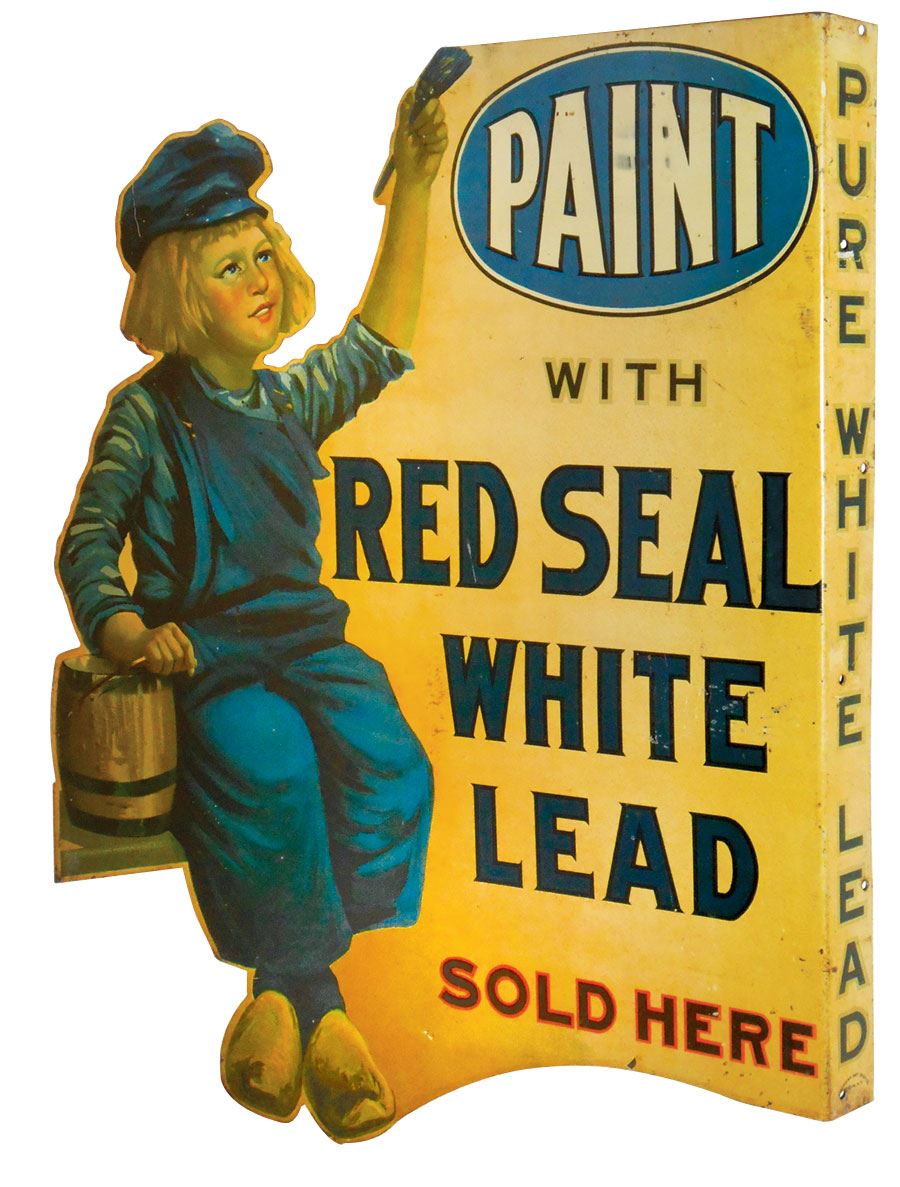
Lead paint did not become common by chance—it earned its place through performance.
From the 18th into the early 20th century, white lead was the backbone of quality paint. It created a dense, durable coating that bonded tightly to wood, remained flexible, resisted moisture, and slowed decay. It also improved coverage and drying, making it far superior to most modern coatings for protecting exterior woodwork.
As ready-mixed paints emerged in the 19th century, lead remained a key ingredient because it worked reliably and extended the life of buildings. Many historic structures owe their survival, in part, to these protective qualities.
Health concerns were known in the 19th century, but largely tied to industrial exposure. Only in the mid-20th century did broader public concern grow, leading to the 1978 residential ban by the U.S. Consumer Product Safety Commission.
Lead paint was not a careless mistake—it was a deliberate, highly effective material. The issue today is not its historic use, but how it has been misunderstood and unnecessarily removed, often damaging the very fabric it once protected.
The Witchhunt that Started it all.
Let’s face it, lead is a legitimate problem. However, the remotest possibility of lead’s presence makes people panic to the point that they can destroy their house, thereby actually worsening the lead situation.
The original intent behind Newport, Rhode Island’s stricter lead enforcement was reasonable. It was aimed at targeting a limited number of poorly maintained rental properties where neglect posed genuine health risks. As a result, instead of the buildings in need, all buildings became victims.
Broad regulations were applied to nearly all pre-1978 buildings, regardless of condition. Extremely stringent testing standards—designed for the worst-case housing scenarios—were imposed across the board. Property owners were given little guidance, no flexibility, and the implicit message that their homes were inherently dangerous – which was totally untrue.
Historic Windows Cannot be Made Lead Safe and Must be Replaced.
This is demonstrably false. Actual field testing proves that historic windows can meet even the strictest dust standards. The problem is not the window. The problem is how the window is maintained—or neglected. This distinction has been ignored, with severe consequences.
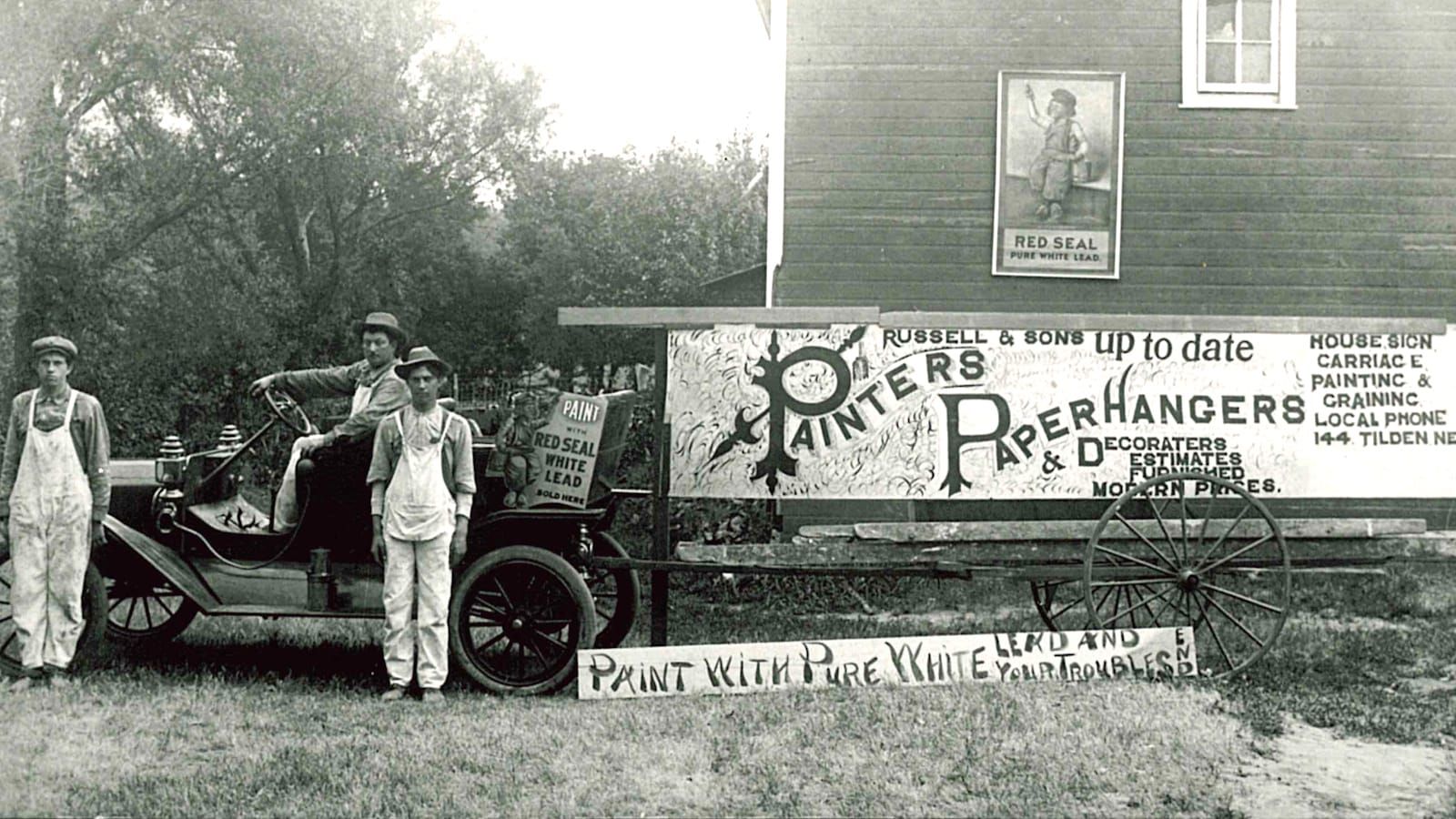
The sign at the bottom says: Paint With Pure White Lead and Your Problems End.
What Actually Creates a Lead Hazard?
Lead paint, when intact, is not a danger.
The hazard comes from abrasion.
- When painted surfaces grind against each other, dust is created.
- When windows bind, stick, or slam, material is worn away.
- That dust—not the paint itself—is what becomes hazardous.
This is a simple, observable reality. Yet enforcement practices routinely treat the mere presence of lead paint as a failure condition, which is both technically incorrect and historically illiterate.
The Simple Solution No One Is Talking About.
The research is clear. Historic windows can be made compliant through basic, practical measures:
- Ensure smooth operation—eliminate abrasion.
- Maintain intact paint surfaces (encapsulation).
- Address friction points where wear occurs.
- Clean existing dust properly.
These are not radical interventions. They are routine maintenance practices.
In many cases, minimal work—simply tuning a window to operate correctly—was enough to pass dust testing under stringent standards.
No replacement.
No gutting.
No destruction.
The Real Hazard: Modern “Remediation”
Ironically, the most dangerous conditions often arise from the very actions meant to “solve” the problem.
When buildings are gutted:
- Lead dust is dispersed throughout the structure.
- It settles in ductwork, cavities, and hidden spaces.
- It becomes far more difficult—sometimes nearly impossible—to fully remove.
Testing has shown that contamination can persist even after repainting.
In other words, aggressive intervention can create a far greater hazard than the original condition.
Window Replacement Is NOT a Solution—It Is a Loss.
Faced with confusion, liability, and fear, many owners default to replacement. This is not preservation. It’s giving up and disrespecting history.
We have seen this pattern before:
- Urban renewal erased entire neighborhoods.
- Energy-efficiency myths justified removing original windows.
- “Improvements” stripped buildings of their architectural integrity.
Each time, the justification sounded reasonable. Each time, the damage was permanent.
This is no different.
A Rational Approach: Understanding, Not Panic.
A more intelligent framework has emerged from the work on the ground—what can best be described as a “lead-smart” approach.
It recognizes:
- Historic buildings are not inherently dangerous.
- Lead hazards are condition-based, not material-based.
- Risk can be managed through knowledge and maintenance.
This is how people lived safely in these buildings for generations. It is how they can continue to do so today.
Conclusion.
The current hysteria surrounding lead paint is not rooted in science. It is rooted in misinterpretation, liability avoidance, and a failure to understand how historic buildings function.
- Historic windows do not need to be removed.
- Lead paint does not require wholesale eradication.
- Destruction should never be the default response to a manageable condition.
What is needed is not more regulation. It is better understanding.
Until that happens, we will continue to lose irreplaceable historic fabric—not to decay, but to fear.
But wait – there’s more!
True Tales from Old Houses Podcast – Lead Paint.
True Tales from Old Houses is a lighthearted, educational podcast hosted by Stacy Grinsfelder that explores the reality of restoring and owning historic homes. I highly recommend subscribing.
The above information comes from Podcast 180: Lead Laws and the Ripple Effect. It is an interview with Rob Cagnetta discussing problems and remedies of lead paint on wood. Here he goes into more detail explaining what the homeowner can do.
In this episode, Stacy looks at why some of the most iconic Gilded Age mansions in Newport were nearly lost, and how that story connects to what’s happening right now with lead safety laws and historic windows in Rhode Island. If you think that is just a local issue, think again.
Stacy Grinsfelder, “Lead Laws, Old Windows, and Practical Solutions,” interview with Rob Cagnetta, True Tales from Old Houses podcast, 2025.
Leave a Reply